

I have a treat for you today! I recently had the opportunity to speak with KidLit author, Jessica Whipple, about her writing process and two amazing picture books, ENOUGH IS… (Tilbury House) and I THINK I THINK A LOT (Free Spirit Publishing) while struggling with OCD. I hope you find her writing journey both inspirational and encouraging.
Please join me in welcoming Jessica!

Welcome Jessica! I always love to hear stories about how authors began their writing journeys. Can you tell me what inspired you to become a writer?
An idea inspired me. I wish I could say, “I have wanted to be a writer since second grade!” because so many of us writers have had those long-timeline dreams. For me, though, I hadn’t considered writing books of any kind until I had the idea for ENOUGH IS… (which I called ENOUGH when I was drafting and submitting it). I’m a “try it and see what happens” kind of person, and I was curious whether I could write and publish a picture book. I have a background in writing, but had never considered writing books and had put away the idea of writing creatively in college.
I’m so glad you dug into that idea! And congratulations seeing it published! That in itself is an amazing feat. And now you have not one, but two books out in the world. How did your personal experience inform both of these books?
For I ENOUGH IS…, the story arose from a place of need—the need to illustrate the concept of “enough” and the quality of contentment. And I THINK I THINK A LOT is based on my own experience having OCD, obsessive-compulsive disorder. Some of the things the child in the book ruminates on are things that actually came from a diary I kept at age 13.
That’s fascinating! I love that, as writers, we can use our own experiences to help children navigate their worlds. What do you hope young readers will take away from these books?
From ENOUGH IS… I hope they understand that wanting something—anything!—can be an uncomfortable feeling. (There’s a mnemonic in the book but I won’t spoil it here.) But the more times we encounter “enough,” the easier it is to recognize, and the less uncomfortable we feel when we’re wanting something. For I THINK I THINK A LOT, I want child readers to know that sometimes if we look on the flip side of something troubling, we can find something beautiful. That’s what the girl in the book does.
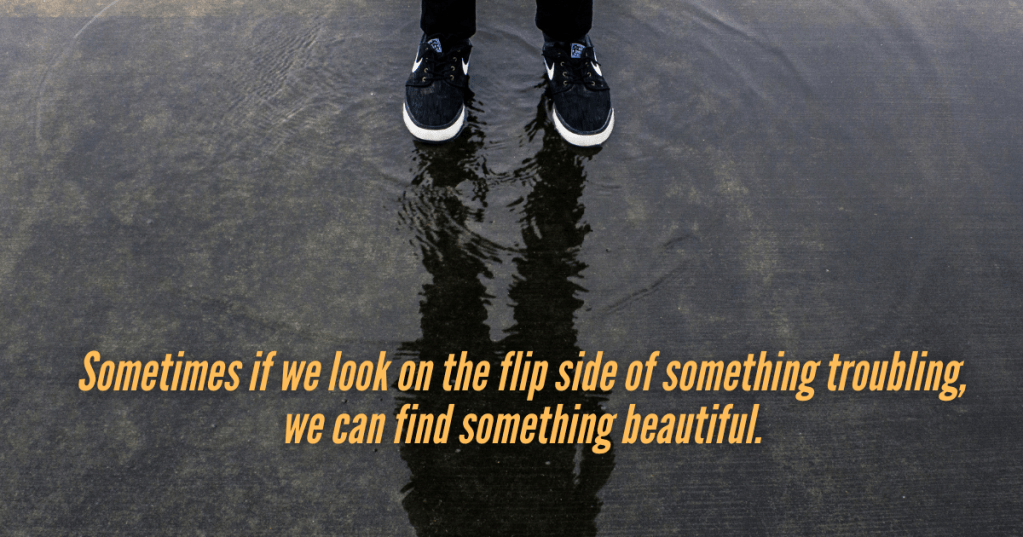
hat is so beautiful! And it’s something, as creators, that we can keep in mind. Things that we might see as a hinderance to our work can actually inform it in beautiful ways, like you did.
But let’s get down to the nitty gritty. Tell me a little bit about your writing process. What is your biggest hurdle to writing? How do you overcome those hurdles to write?
I’m not enough of a linear thinker to have what I’d call a process! But when I have an idea, I usually start with notes on my phone, a blank Word doc, or on my ipad notes app. Then when I sense it’s going somewhere I put more focused effort into making it into something more cohesive. When I can see it forming something I’d call a picture book manuscript, I’ll approach it from a few different angles, perhaps write it a few different ways, and see what becomes of it.
My biggest hurdle is getting over my hesitation to brainstorm. Sometimes I only like to write when the idea comes organically, but I’ve gotten a lot of good ideas from deliberate brainstorming or writing from a prompt.
It’s not PB-specific, but when I’m stuck I usually visit the Rattle Poetry Magazine website where there’s a monthly ekphrastic challenge. That’s where they post a piece of art and the challenge is to write a poem from it. So I usually start there or with some other prompt and go from there. I think it would be fun to pose a question on social media asking someone to challenge me to write about _____, but I’ve not yet tried that. Maybe someday!
As for advice regarding similar issues, perhaps give those ideas a try?
Take the good things, like a nugget of good feedback or a helpful rejection, and cherish them.
Writing is a hard journey, isn’t it? I love that everyone’s path is unique and that ideas are right there at our fingertips. Anything else you’d like to add before we close today?
If you’re writing and trying to be traditionally-published, know that it is a lonnnnnnng road. And you’ve probably heard this from everyone already, but you must have thick skin, which is a shorter, not-as-apt way of saying this: You must be able to take the good things, like a nugget of good feedback or a helpful rejection, and cherish them. Use each one to build your confidence, and keep working, learning, and submitting.
Thank you so much for joining us today Jessica.

JESSICA WHIPPLE is a poet and author of two children’s picture books: Enough Is… (Tilbury House 2023, illust. Nicole Wong) and I Think I Think a Lot (Free Spirit Publishing 2023, illust. by Josée Bisaillon). Her work for adults has appeared in Philadelphia Stories, ONE ART, McSweeney’s, and Gastronomica: The Journal of Food Studies. “Splinters,” appearing in Door Is a Jar, received a Best of the Net and a Pushcart nomination. She lives in PA and inhabits the places where picture books and poetry intersect. Jessica is represented by Emily Keyes of Keyes Agency and can be found online at AuthorJessicaWhipple.com.
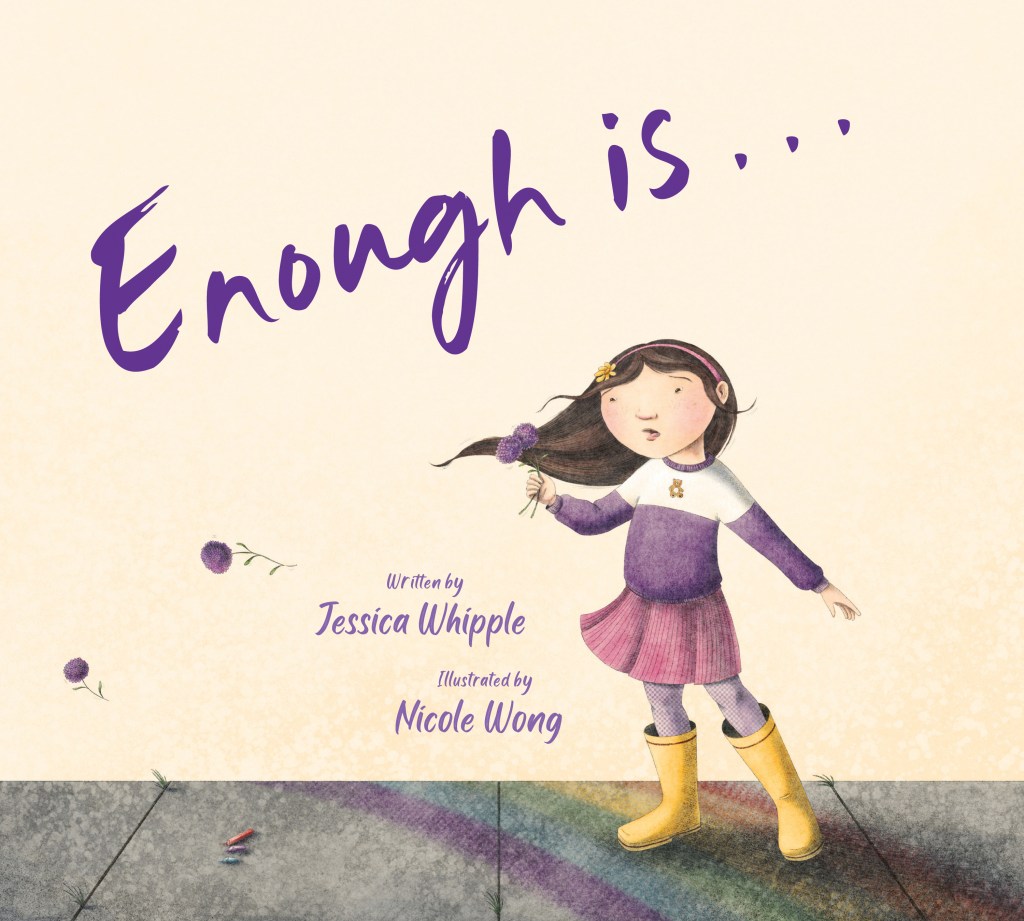
ABOUT THE BOOK: For kids encountering the pressure to fit in with peers, this picture-book story explores a concept that is key to happiness: how much is enough?
How many friends, turns, clothes, toys, fashion accessories, books? How much of anything? The pictures follow one child as she learns the difference between wanting and needing and, in the end, feels the contentment that flows from being satisfied with what she has. The text, meanwhile, frames a difficult idea in simple, spare language: “Somewhere between a little and a lot, there is Enough. It might be hard to spot, but it’s always there.”
Buy the Book: Tilburry House

ABOUT THE BOOK: A young girl notices, and celebrates, her way of looking at and experiencing the world.
“I think. I think a lot. I think I think a lot. More than most other kids.” A young girl notices and wonders about the ways she and her classmates approach doing good work, caring about people’s feelings, and showing they’re grateful. She comes to accept herself just as she is and celebrates the differences between herself and her classmates. “I care a lot. Not more than other kids, just in my own way.”
Inspired by the author’s experience with obsessive-compulsive disorder (OCD), I Think I Think a Lot can be a starting point for discussions about overthinking or obsessive thought and about the many ways individuals see and experience the world. The neurodivergent main character allows readers to see themselves and others in the story and emphasizes self-acceptance in the face of comparison.
Buy the Book: Barnes and Noble
 CAROLYN BENNETT FRAISER